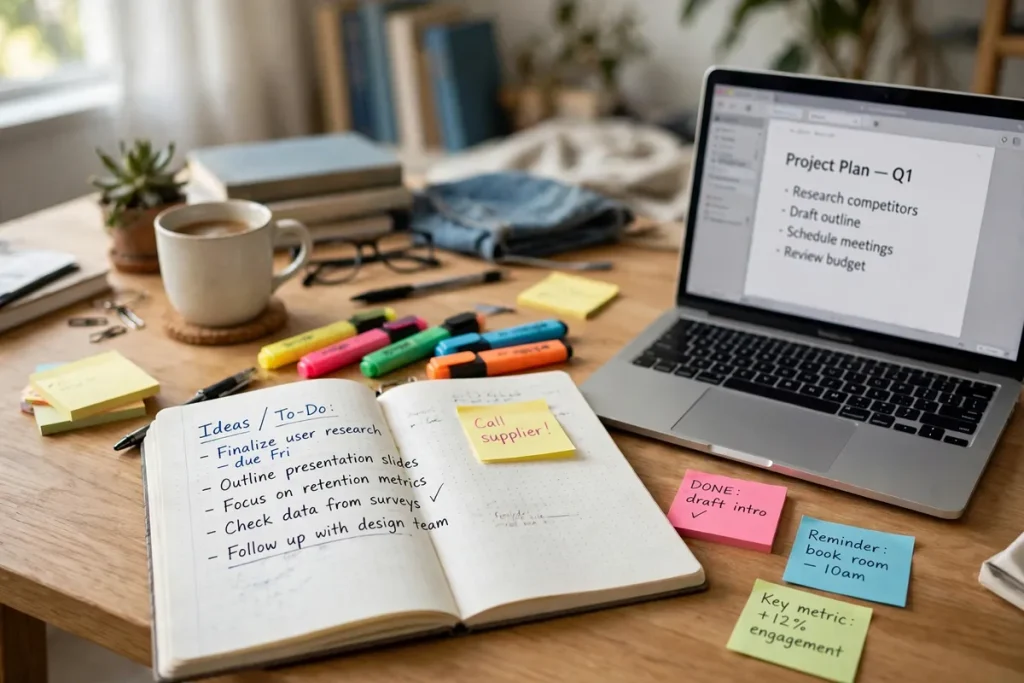

Learning how to choose a notebook sounds simple until you stand in front of a wall of them. A5 or A4? Lined, dotted, or blank? Hardcover or softcover? Paper so thin your pen bleeds through, or paper so thick the notebook weighs a pound? The right answer depends on one thing: what you will actually do with it.
Most guides list the same features — size, paper, binding, and price — but they rarely match those features to a real use, or tell you how to test paper with your own pen before you commit. This guide does both, with a comparison table by use, a paper-and-pen test, and a short checklist you can use in the store or online.
Start With the Use, Not the Notebook
Before you compare brands, write down your main use in one sentence. “Daily notes in meetings” needs a different notebook from “sketching on the train” or “a bullet journal I carry everywhere.” The use decides the size, the ruling, and the paper weight. A notebook bought for the wrong use usually ends up half-empty in a drawer.
| Main use | Best size | Best ruling | Best paper |
|---|---|---|---|
| Work meetings and daily notes | A5 | Lined or dotted | 80 to 100 gsm, smooth |
| Study and class notes | A4 or B5 | Lined | 80 gsm or higher, no bleed |
| Journaling and planning | A5 | Dotted | 100 gsm or higher for pens and markers |
| Sketching and drawing | A5 or A4 | Blank | 120 gsm or higher, textured |
| Travel and pocket lists | A6 or pocket | Blank or lined | 80 gsm, light and flexible |
| Fountain pens | A5 | Any | 100 gsm or higher, coated or Tomoe River style |
Size: A5 Is the Safe Default
A5, about 5.8 by 8.3 inches, is the most versatile size. It is big enough to write comfortably, small enough to fit in most bags, and easy to find in every ruling and binding. A4 is better for study, where you need room for diagrams and handouts, but it is heavy to carry all day. A6 and pocket sizes are best as a second notebook for lists and ideas on the go, not as your only notebook.
Hold the notebook in your hand before you buy it, if you can. Open it flat, write a few lines, and carry it around the store. A notebook that feels awkward in five minutes will feel worse after five weeks.
Paper: Weight, Ghosting, and Bleed-Through
Paper weight is measured in gsm, or grams per square meter. Higher gsm usually means thicker paper and less show-through, but it also means a heavier notebook. For most people, 80 gsm is the minimum for daily writing with a ballpoint or gel pen. If you use fountain pens, markers, or highlighters, look for 100 gsm or higher.
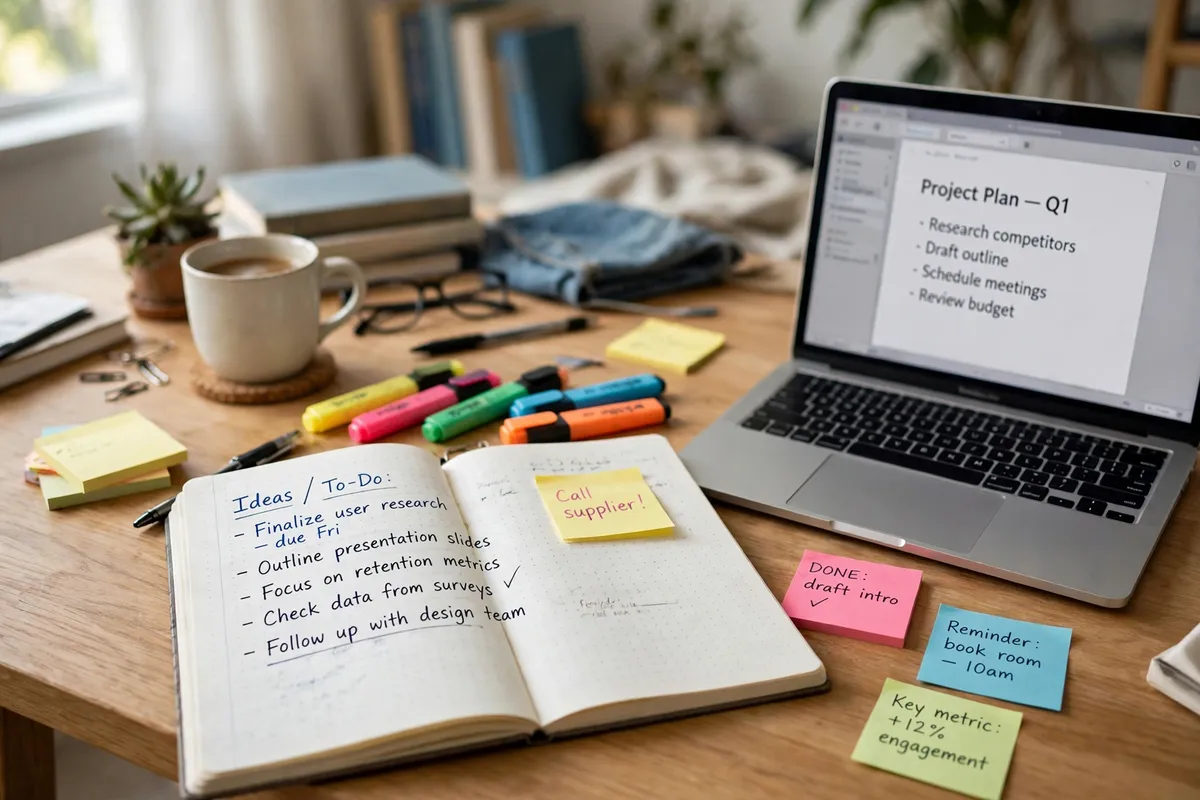
The 2-minute paper test
- Write with the pen you use most, then turn the page over. Can you see the writing? That is ghosting.
- Draw a small filled square and a highlighter line. If ink soaks through, that paper will not suit wet pens.
- Write fast, as you would in a meeting. Does the pen skip or drag on the surface?
- Check the back of the page after 30 seconds. Smudged ink will smudge in your bag too.
If you take a lot of notes, the notebook is only half of the system. The method matters just as much. Our guide to note-taking methods compares seven proven ways to take notes, from Cornell notes to mind mapping, so you can match your method to your notebook.
Ruling: Lined, Dotted, Grid, or Blank?
| Ruling | Best for | Watch out for |
|---|---|---|
| Lined | Fast writing, class notes, lists | Line spacing may be too narrow for large handwriting |
| Dotted | Journaling, planning, mixed writing and drawing | Dots can be hard to see in low light |
| Grid | Math, diagrams, handwriting practice | Can feel busy for plain writing |
| Blank | Sketching, mind maps, free writing | Lines can drift without a guide |
When in doubt, choose dotted. It guides your writing without forcing it into lines, and it works for lists, tables, and small sketches in the same notebook. Lined is the safer choice if you write fast and a lot, and your handwriting is large.
Binding and Cover: How Will You Carry It?
Binding decides whether a notebook lies flat, survives a bag, and opens to the last page without cracking. Spiral binding lies flat and folds back, which is great for desks, but the wire can catch on things. Stitched or thread-sewn binding lies flat, lasts longer, and looks better, but it usually costs more. Stapled notebooks are light and cheap, and best for short projects.
For covers, hardcover protects pages in a bag and gives you a firm surface to write on without a desk. Softcover is lighter, more flexible, and easier to slip into a pocket or a small bag. If you carry your notebook every day, a hardcover or a softcover with an elastic closure will last longer than a thin paper cover.
Your Notebook Checklist
- Use: I can name the one main job for this notebook.
- Size: It fits my bag and my hand, and I can write a full page comfortably.
- Paper: It passes the pen test, with no bleed-through from my usual pen.
- Ruling: It matches how I write, draw, or plan.
- Binding: It lies flat and opens without cracking.
- Pages: There are enough pages for at least a month of use.
- Price: It is cheap enough that I will actually use it, not save it for “someday.”
That last point matters more than it sounds. An expensive notebook can make you afraid to write in it. A notebook you enjoy using, even a simple one, is the one that will hold your ideas. If journaling is part of your daily routine, see our mindfulness apps guide for simple daily practices to pair with a paper journal, and how to practice self-care for small habits that make a journaling routine stick.
Frequently Asked Questions
What size notebook should I choose?
Choose A5 for most uses. It is the best balance of writing space and portability. Choose A4 or B5 for study and large diagrams, and A6 or pocket size for lists and travel.
What paper weight is best for a notebook?
For ballpoint and gel pens, 80 gsm is usually enough. For fountain pens, markers, and highlighters, choose 100 gsm or higher to avoid ghosting and bleed-through. Test the paper with your own pen before you buy a large pack.
Is a dotted or lined notebook better?
Dotted is more flexible for journaling, planning, and mixed writing and drawing. Lined is better for fast, long-form writing and class notes. If you do both, dotted is the safer all-round choice.
How much should a good notebook cost?
A good everyday notebook costs $5 to $15. Premium paper notebooks cost $15 to $30. Price is not a reliable guide on its own: check the paper weight, the binding, and whether it passes the pen test.
Conclusion
Choosing a notebook is choosing a tool you will use every day. Start with the use, pick A5 and dotted paper if you are unsure, and test the paper with your own pen. The best notebook is not the most expensive one, or the prettiest one on the shelf. It is the one you reach for without thinking, and fill without saving it for later.