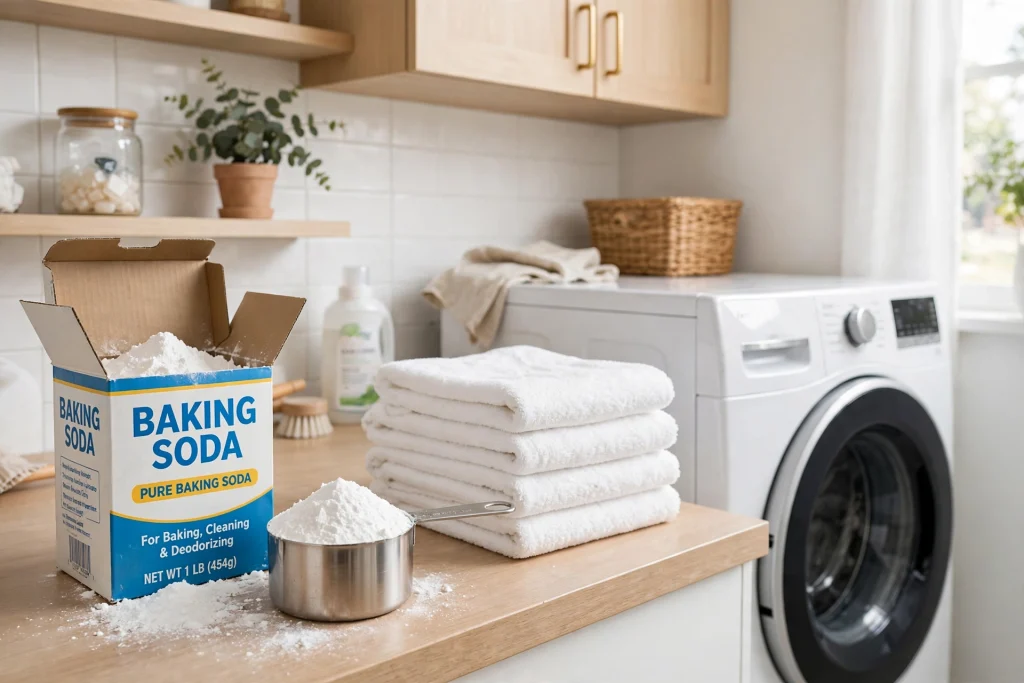

Baking soda in laundry is one of those old household tricks that actually works, but only if you use it in the right place, in the right amount, and for the right job. It is cheap, widely available, and gentle on most fabrics, yet many guides oversell it. It will not replace detergent, it will not remove every stain, and mixed with the wrong product it can cancel out the very benefit you were hoping for.
This guide explains what baking soda in laundry really does, how much to use in top loaders, front loaders, and high-efficiency machines, how to use it for whites, odours, stains, and towels, and what never to mix it with. It also compares baking soda with washing soda, borax, and vinegar, so you can choose the right product for each load instead of guessing.
What Does Baking Soda Do in Laundry?
Baking soda, or sodium bicarbonate, is a mild alkali with a pH of about 8.3. In the wash it does three useful things. First, it helps to neutralise acids, including the acids in sweat and body odour, which is why it is so good at deodorising clothes, towels, and gym kit. Second, it softens water slightly, which helps detergent work better, especially in hard-water areas. Third, it can help to lift light dirt and brighten fabrics, although it is not a strong stain remover on its own.
What baking soda does not do is also important. It is not a disinfectant, it does not kill most bacteria or mould on its own, and it does not soften fabric in the same way as a commercial fabric softener. It will not whiten badly greyed clothes by itself, and it will not fix a washing machine that smells because of mould in the seal or detergent drawer. For those jobs you need a different product, or a machine-cleaning cycle.
How Much Baking Soda to Use in Laundry
The amount depends on your machine type and load size. Too little will have almost no effect, and too much will leave a white residue on dark clothes and can build up in the machine over time. The table below is a safe starting point for most households.
| Machine and load | Amount of baking soda | Where to add it |
|---|---|---|
| Top loader, full load | 1/2 cup (about 115 g) | Directly in the drum, before clothes |
| Top loader, small load | 1/4 cup (about 55 g) | Directly in the drum |
| Front loader / HE, full load | 1/4 to 1/2 cup (55 to 115 g) | Directly in the drum, not the dispenser |
| Front loader / HE, small load | 2 tablespoons | Directly in the drum |
| Hand wash, basin | 1 to 2 tablespoons | Dissolved in warm water |
| Soak for odours | 1/2 cup per gallon (4 litres) | Dissolved in water, soak 30 to 60 minutes |
Add baking soda directly to the drum, not to the detergent dispenser, unless your machine manual says otherwise. It can clog a dispenser, especially in a front loader, and it needs to dissolve in the wash water to work. Add your normal detergent as usual, then the baking soda, then the clothes. Do not reduce your detergent by half just because you added baking soda. Baking soda is a booster, not a replacement, and using too little detergent will leave clothes less clean.
For high-efficiency machines, use the lower end of the range. HE machines use less water, so a full half cup can be harder to dissolve and rinse out. If you notice a white film on dark clothes, reduce the amount next time and run an extra rinse.
Baking Soda for Smelly Clothes, Towels, and Gym Kit
Odour is the job baking soda does best. Sweat, smoke, pet smells, and musty towels are all helped by a baking soda wash, because the powder neutralises the acidic compounds that cause the smell rather than covering them with perfume.
For everyday smelly clothes, add half a cup to the drum with your normal detergent and wash on a warm cycle. For towels that smell musty even after washing, try a soak first: dissolve half a cup of baking soda in a basin or bath of warm water, soak the towels for an hour, then wash them normally with detergent and dry them fully. Towels that stay damp are the main cause of musty smells, so make sure they dry completely, ideally in sunlight or on a high heat if the label allows it.
For gym clothes, which are often made from synthetic fabrics that hold odour, add baking soda to the wash and avoid fabric softener, which coats synthetic fibres and traps smells. Wash gym kit as soon as you can after exercise, turn it inside out, and do not leave it in a closed bag. If a shirt still smells after washing, soak it in baking soda water for 30 minutes before you wash it again.
For clothes that smell of smoke, a baking soda soak is also useful, but you may need two washes. Air the clothes outside first, soak them, then wash with detergent and baking soda, and dry them outside if you can.
Baking Soda for Whites and Bright Colours
Baking soda can help whites look brighter by softening the water and helping detergent to work, but it is not a bleach. It will not turn grey whites back to bright white on its own. For that, you need a proper whitening method. Our guide to how to whiten clothes explains nine ways to bring back bright whites, including oxygen bleach, which is a stronger and safer choice for most white cotton than chlorine bleach.
For a maintenance wash, add half a cup of baking soda to a load of whites with your normal detergent and wash on warm. For colours, baking soda is generally safe, because it does not bleach fabric, but always test a new method on an old garment first if you are worried about fading. Do not use baking soda as a substitute for colour-safe bleach if your whites are badly stained, because you will be disappointed.
Baking Soda for Stains: What Works and What Does Not
Baking soda can help with some stains, but it is not a universal stain remover. It works best as a paste for fresh, greasy or acidic stains, and as a soak for odour-related stains.
To make a paste, mix three parts baking soda with one part water until you have a thick paste. Apply it to the stain, leave it for 15 to 30 minutes, then rinse and wash normally. This can help with sweat stains on collars and underarms, light food stains, and grease if you apply it before the stain sets. It will not reliably remove set-in stains, ink, blood, or red wine on its own, and scrubbing hard with a paste can damage delicate fabrics.
For sweat stains, which are often yellowed by a reaction between sweat and deodorant, a baking soda paste can lighten the stain, but an oxygen bleach soak is usually more effective. For oil stains, first blot the excess oil, apply baking soda to absorb what remains, leave it for 30 minutes, brush it off, then wash with a strong detergent. For blood, use cold water only, never hot water, because heat sets blood stains.
What Never to Mix With Baking Soda in Laundry
The most common mistake is mixing baking soda and vinegar in the same wash and expecting a super-cleaner. Baking soda is alkaline and vinegar is acidic. When you mix them, they react, fizz, and largely cancel each other out, leaving mostly water and sodium acetate. You lose the cleaning benefit of both. That does not mean you cannot use both in laundry, but you should use them at different stages: baking soda in the wash, and vinegar, if you use it, in the rinse as a softener and odour remover. Never pour vinegar and baking soda into the same dispenser at the same time.
Do not mix baking soda with chlorine bleach. The combination can create harmful fumes and can damage fabric. Do not add baking soda to a wash that already contains a large amount of washing soda or borax, because you will be adding extra alkali without extra benefit, and you risk residue and skin irritation. Always follow the care label on the garment, and check your washing machine manual before you add any powder to the drum.
| Product | What it does | When to use it |
|---|---|---|
| Baking soda | Deodorises, softens water, mild cleaning | Smelly loads, whites maintenance, gentle boost |
| Washing soda | Stronger alkali, cuts grease, softens water | Heavy dirt, greasy work clothes, hard water |
| Borax | Boosts detergent, deodorises, mild disinfectant | Stains, odours, hard water, when label allows |
| White vinegar | Acidic, softens, removes odour in rinse | Rinse cycle only, not with baking soda |
| Oxygen bleach | Whitens, removes stains, disinfects gently | Whites, stained cottons, soak |
Baking Soda, Washing Soda, and Borax: How They Differ
Many people confuse baking soda with washing soda, but they are different products. Washing soda, or sodium carbonate, is more alkaline and stronger than baking soda. It is better at cutting grease and softening hard water, but it is harsher on skin and fabric, and it should not be used on wool or silk. Baking soda is gentler and safer for everyday loads, while washing soda is better for heavy-duty cleaning.
Borax, or sodium borate, is another laundry booster. It helps detergent to work better, deodorises, and has mild disinfectant properties. It is stronger than baking soda, but it should be used with care, kept away from children and pets, and not used on delicate fabrics unless the label allows it. If you want a simple, safe, everyday booster, baking soda is the best starting point. If you have very hard water or very dirty loads, washing soda or borax may work better.
Which Fabrics Can You Use Baking Soda On?
Baking soda is safe for most common fabrics, including cotton, polyester, linen, and blends, when it is used in the amounts in this guide. It is also generally safe for towels, sheets, and children’s clothes. It is not recommended for wool or silk, because the alkaline pH can damage the fibres, and it should not be used on fabrics labelled dry clean only.
Always read the care label first, especially for delicate items. Our guide to clothing wash care symbols explains what each label means, including the symbols for washing, drying, and bleaching, so you can check whether a garment can be washed with a booster at all. If a label says do not bleach, do not use oxygen bleach, but a small amount of baking soda in a normal wash is usually still safe for washable cotton and polyester. When in doubt, test on a hidden area first.
Can Baking Soda Damage Your Washing Machine?
Used in the amounts in this guide, baking soda should not damage a modern washing machine. It dissolves in water, it does not corrode metal in normal use, and it can even help to keep the drum smelling fresh. Problems arise when people use far too much, pour it into the detergent dispenser where it clogs, or use it every wash in a machine that already has a build-up of detergent residue.
To keep your machine in good condition, use the recommended amount, add it to the drum, run an extra rinse if you notice residue, and run a hot empty cycle with a machine cleaner once a month if your manual recommends it. If your machine already smells musty, baking soda alone will not fix it. Clean the seal, the detergent drawer, and the filter, and leave the door open after each wash so the drum can dry.
Does Baking Soda Make Clothes Softer?
Baking soda can make clothes feel softer by softening hard water, which reduces the mineral deposits that make fabric feel stiff. It is not a fabric softener in the usual sense, and it will not give the same soft, scented feel as a commercial softener. If you want softer towels, the best steps are to use less detergent, avoid fabric softener, which coats towel fibres and reduces absorbency, and dry towels fully. Adding baking soda to the wash can help, but it is not a substitute for proper drying and for not overloading the machine.
Cost and Storage
Baking soda is one of the cheapest laundry boosters you can buy. A large box costs far less per wash than most commercial boosters, and a little goes a long way. Store it in a cool, dry place, in a sealed container, away from moisture. Baking soda absorbs odours from the air, so an open box in a damp laundry room will lose its strength over time. If you use it for cooking as well, keep a separate box for laundry, and do not use a box that has been sitting open for months.
Frequently Asked Questions
Can I use baking soda instead of detergent?
No. Baking soda is a booster, not a detergent. It does not contain surfactants, which are the ingredients that lift dirt and oil from fabric. If you wash with baking soda alone, your clothes will smell fresher but they will not be properly clean.
How much baking soda should I put in the washing machine?
Use half a cup for a full top-loader load, and a quarter to half a cup for a front loader or HE machine. For a small load, use a quarter cup or two tablespoons. Add it directly to the drum, not to the dispenser.
Can I mix baking soda and vinegar in laundry?
Do not mix them in the same wash, because they cancel each other out. Use baking soda in the wash cycle and vinegar in the rinse cycle if you want to use both.
Is baking soda safe for black clothes?
Yes, in normal amounts, because baking soda does not bleach fabric. Use a smaller amount for dark loads, and run an extra rinse if you notice any white residue.
Does baking soda remove odours from clothes?
Yes, odour removal is its strongest benefit. It neutralises acidic odour compounds in sweat, smoke, and musty towels. For very smelly items, soak them in baking soda water before washing.
Can baking soda damage my washing machine?
Not in normal amounts. Use the recommended dose, add it to the drum, and avoid pouring large amounts into the dispenser. Clean your machine regularly and leave the door open to dry.
The Bottom Line
Baking soda in laundry works best when you treat it as a simple, cheap booster for a specific job, not as a miracle cleaner. Use half a cup in the drum for smelly loads, for whites maintenance, and for towels that need freshening. Use it for a soak before washing if the odour is strong, and use a paste for fresh sweat and grease stains. Do not use it instead of detergent, do not mix it with vinegar in the same cycle, and do not use it on wool, silk, or dry-clean-only clothes. If you want fresher-smelling laundry, and you want to help your detergent work better in hard water, baking soda is one of the easiest and cheapest ways to do it. For clothes that need to smell good all day, not just after washing, read our guide to how to smell good all day, which covers habits that keep you fresh long after the wash is done.