

A vegan skin care line is a collection of skin care products made without animal-derived ingredients and, in most cases, without animal testing. It is not just a label on a bottle. A good vegan skin care line is built around plant-based ingredients that clean, hydrate, and protect the skin, while avoiding common animal ingredients such as beeswax, lanolin, collagen, and carmine.
Interest in vegan skin care has grown quickly, and for good reason. Many people want products that match their values, are gentler on sensitive skin, and are made with clear, honest ingredient lists. At the same time, vegan does not automatically mean effective, natural, or suitable for every skin type. The key is to understand what vegan really means, which ingredients do the work, and how to build a routine in the right order.
This guide explains what to look for in a vegan skin care line, how to choose products for dry, oily, combination, and sensitive skin, and how to put together a simple morning and evening routine. You will also find ingredient tables, common mistakes to avoid, and answers to the questions people ask most before switching to vegan skin care.
What Does Vegan Skin Care Really Mean?
Vegan skin care means no ingredients that come from animals. That includes obvious ones, such as honey, beeswax, and milk, and less obvious ones, such as squalane made from shark liver, lanolin from sheep’s wool, and carmine, a red colour made from insects. Most vegan brands also avoid animal testing, although vegan and cruelty-free are technically different claims, so check for both if both matter to you.
Look for trusted certification marks such as the Vegan Society trademark, Leaping Bunny, or PETA’s cruelty-free logo. These marks mean an independent organisation has checked the ingredients and, in the case of cruelty-free certification, the testing policy. A product that simply says vegan on the front, with no certification and a vague ingredient list, deserves a closer look.
It is also worth knowing what vegan does not mean. It does not mean fragrance-free, hypoallergenic, or chemical-free. Plant ingredients can still irritate the skin, especially essential oils, and some vegan products contain synthetic fragrances or strong preservatives. Read the full ingredient list, not just the claims on the front of the bottle.
Vegan vs Conventional Skin Care
| Feature | Vegan skin care line | Conventional skin care |
|---|---|---|
| Animal ingredients | None | May include beeswax, lanolin, collagen, honey |
| Animal testing | Usually avoided | Varies by brand and market |
| Key moisturisers | Plant oils, shea butter, plant squalane | Petroleum, lanolin, animal squalane |
| Common actives | Plant-based retinol alternatives, vitamin C, niacinamide | Retinol, animal collagen, snail mucin |
| Environmental impact | Often lower, but depends on sourcing | Varies widely |
| Effectiveness | Can be excellent if well formulated | Can be excellent if well formulated |
The most important point in that comparison is the last row. A product works because of its formulation, the concentration of its active ingredients, and how well it suits your skin, not because it is vegan or conventional. A well-made vegan skin care line can be just as effective as a conventional one, and a poorly made one can be a waste of money, however kind its label sounds.
Key Vegan Ingredients and What They Do
Plant-based skin care uses many of the same kinds of ingredients as conventional skin care, just from different sources. Understanding a few of them helps you read a label with confidence and choose products that actually do something.
| Ingredient | What it does | Best for |
|---|---|---|
| Hyaluronic acid (vegan, fermented) | Draws water into the skin | Dehydrated and dry skin |
| Niacinamide (vitamin B3) | Calms redness, supports the skin barrier | Sensitive and uneven skin |
| Vitamin C | Brightens and supports collagen | Dull skin and dark spots |
| Bakuchiol | Gentler plant alternative to retinol | Fine lines, sensitive skin |
| Squalane (from olives or sugarcane) | Light, non-greasy moisture | All skin types, including oily |
| Shea butter | Rich moisture and protection | Dry and very dry skin |
| Jojoba oil | Balances oil without clogging pores | Oily and combination skin |
| Green tea extract | Antioxidant, calms irritation | Red or reactive skin |
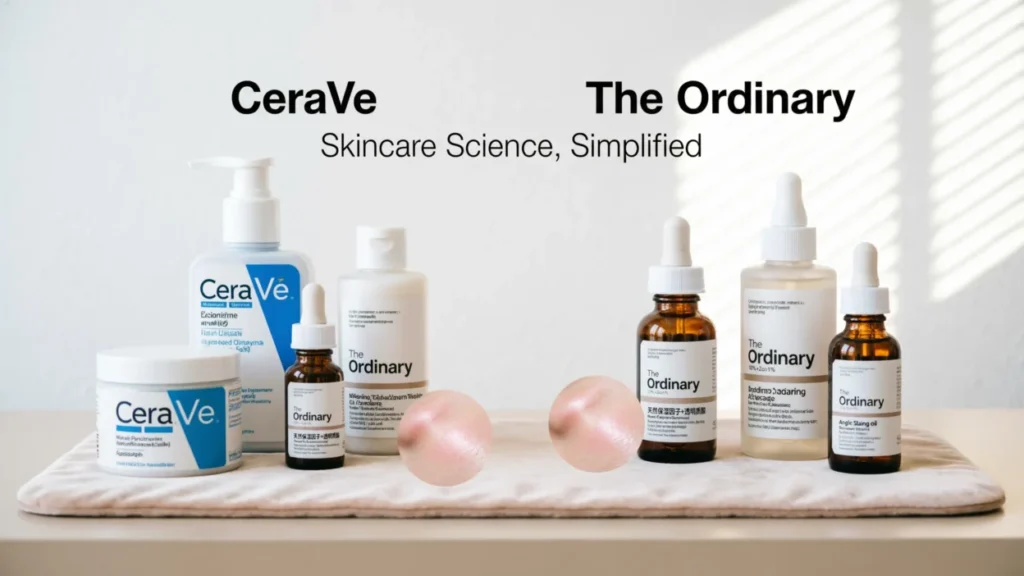
Bakuchiol deserves a special mention. It is one of the most popular ingredients in a modern vegan skin care line because it offers some of the smoothing benefits of retinol with less irritation. It is not identical to retinol, and the research is still developing, but many people with sensitive skin find it a useful alternative. If you want to compare well-known non-vegan formulas first, our guide to CeraVe vs The Ordinary for skin care effectiveness shows how to judge a product by its ingredients rather than its marketing.
Be careful with essential oils. Lavender, tea tree, and citrus oils are common in vegan products and can smell lovely, but they can also irritate sensitive skin and make it more reactive to sunlight. If your skin is reactive, choose fragrance-free vegan products, even if the fragrance comes from plants.
How to Build Your Vegan Skin Care Routine
A good routine does not need ten steps. Three to five products, used consistently, will do more than a shelf full of products used at random. Start simple, give each new product two to three weeks, and add one product at a time so you can tell what is helping and what is not.
Morning routine
Start with a gentle cleanser to remove overnight oil and sweat. Follow with a hydrating serum, such as hyaluronic acid on damp skin, then a moisturiser suited to your skin type. Finish with sunscreen, which is the single most important step for preventing dark spots and early ageing. A vegan sunscreen is available from many brands, but check the label, because some mineral sunscreens are vegan while others are not.
Evening routine
In the evening, cleanse again to remove sunscreen, makeup, and pollution. This is the best time for treatment products, such as a vitamin C serum, a bakuchiol serum, or a gentle exfoliant used two or three times a week. Finish with a slightly richer moisturiser than you use in the morning, especially if your skin feels tight after cleansing.
Layer products from thinnest to thickest. Water-based serums go on first, then creams, then oils. Wait a minute between layers so each product can absorb. Using too much of any product does not make it work faster. A pea-sized amount of serum and a small coin-sized amount of moisturiser are usually enough for the whole face.
Choosing a Vegan Skin Care Line for Your Skin Type
Dry skin needs rich moisture and gentle cleansing. Look for a cream cleanser, a hyaluronic acid serum, and a moisturiser with shea butter or plant squalane. Avoid foaming cleansers that leave your skin feeling tight, and skip strong exfoliants until your skin barrier feels comfortable.
Oily and acne-prone skin needs light hydration, not no hydration. Skipping moisturiser can make oily skin produce even more oil. Choose a gel or light lotion, a niacinamide serum, and a gentle cleanser with salicylic acid from a plant source if your skin tolerates it. Jojoba oil can help balance oil, but use it sparingly at first.
Combination skin often needs different products for different areas. Use a light moisturiser all over and a richer cream only on dry patches. A single balanced routine is usually simpler than buying two full sets of products, and it is easier to stay consistent.
Sensitive skin needs the simplest routine of all. Choose fragrance-free products, introduce one new product at a time, and patch-test on the inside of your arm or behind your ear before using it on your face. If a product stings, turns your skin red, or causes spots, stop using it. That is not purging, it is irritation, and your skin is telling you the product is not right for you.
Common Mistakes When Switching to Vegan Skin Care
The most common mistake is switching everything at once. If you change your cleanser, serum, moisturiser, and sunscreen in the same week and your skin reacts, you will have no idea which product caused the problem. Change one product at a time and give your skin time to adjust.
The second mistake is over-exfoliating. Vegan exfoliants, such as fruit acids and enzyme powders, can be just as strong as conventional ones. Using them daily can damage the skin barrier, cause redness, and make breakouts worse. Two or three times a week is enough for most people.
The third mistake is forgetting sunscreen. No skin care routine, vegan or not, can protect your skin from sun damage without it. Vitamin C and bakuchiol can help the appearance of your skin, but they do not replace sunscreen. For travel and daily life, it is also worth knowing the practical rules around the products you carry, as explained in our guide to how to smell good all day, which covers layering scented products without overwhelming your skin.
Finally, do not assume a high price means a better product. Some affordable vegan skin care lines are well formulated and clearly labelled, while some expensive ones rely on pretty packaging and vague claims. Judge a product by its ingredient list, its concentration of active ingredients, and how your skin responds to it over several weeks.
Vegan Skin Care for Tattoos and Body Skin
A vegan skin care line is not only for the face. Body skin, hands, and tattooed skin also benefit from plant-based moisture. For new tattoos, a gentle, fragrance-free vegan moisturiser can help keep the skin comfortable while it heals, but always follow your tattoo artist’s aftercare instructions first. Our guide to tattoo lotion explains what to look for in a lotion for tattooed skin and how to apply it without irritating fresh ink.
For the body, a simple routine works well: a gentle wash, a moisturiser applied to damp skin after a shower, and sunscreen on exposed areas. You do not need a separate product for every part of the body. One good moisturiser, used consistently, is better than three that sit unused.
Frequently Asked Questions
Is vegan skin care better for sensitive skin?
It can be, but not automatically. Many vegan products avoid common irritants, but plant extracts and essential oils can also irritate sensitive skin. Choose fragrance-free formulas, patch-test new products, and introduce them one at a time.
Does vegan mean cruelty-free?
Not always. Vegan means no animal-derived ingredients. Cruelty-free means no animal testing. Many brands are both, but check for both claims and look for independent certification if both matter to you.
Can a vegan skin care line help with acne?
Yes, if it contains proven ingredients such as niacinamide, salicylic acid, or a gentle retinoid alternative, and if you use it consistently. Vegan products alone do not cure acne, and severe acne is worth discussing with a dermatologist.
How long does it take to see results?
Hydration improves in a few days, while changes in tone, texture, and fine lines usually take four to eight weeks. Skin renews itself in roughly a month, so give a new routine at least that long before judging it.
Is vegan skin care more expensive?
Sometimes, but not always. Some vegan brands are affordable, while others charge more for sourcing and certification. Focus on a small number of well-formulated products rather than buying a large, expensive set.
A vegan skin care line works best when you choose it for your skin type, not just for its label. Learn the ingredients that help your skin, keep your routine simple, use sunscreen every day, and give new products time to work. With a little patience, a kind routine can also be an effective one.