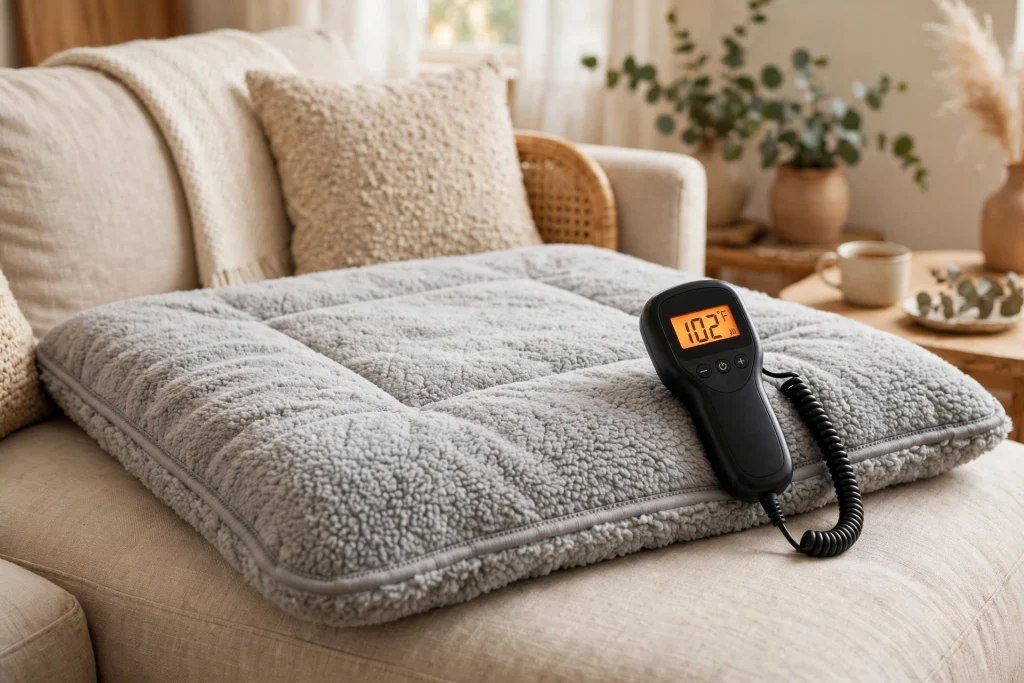

An electric heating pad is one of the simplest and most effective tools for easing muscle pain, stiffness, and cramps at home. It delivers steady, controllable warmth directly where it hurts, helping blood flow, relaxing tight muscles, and making everyday movement easier. Unlike a hot water bottle, an electric heating pad holds a consistent temperature, warms up in minutes, and usually switches off automatically for safety.
This guide explains how an electric heating pad works, who it helps most, how to choose the right size and features, and how to use it safely. You will also find a comparison of the main types, a step-by-step routine for best results, and answers to the questions people ask most before buying one.
What Is an Electric Heating Pad?
An electric heating pad is a flexible pad with heating wires inside, covered in soft fabric. You plug it into a wall outlet, choose a heat setting, and place it on the sore area. Most models have three to six heat levels, a timer, and an automatic shut-off. Some offer moist heat, while others are designed for dry heat only.
Heat therapy, also called thermotherapy, works by widening blood vessels and increasing circulation to the treated area. More blood brings more oxygen and nutrients, while warmth relaxes muscle fibres and reduces the stiffness that often makes pain worse. That is why heat feels so comforting on a sore back, a stiff neck, or period cramps.
An electric heating pad is different from a microwave heat pack or a chemical warm-up patch. A microwave pack cools down quickly and heats unevenly. A patch is single-use and cannot be adjusted. An electric heating pad gives you repeatable, adjustable heat for as long as the session lasts, which makes it a practical choice for regular use.
Who Can Benefit From an Electric Heating Pad?
Many people keep an electric heating pad in a drawer for occasional aches, while others use one daily as part of a pain-management routine. It is most helpful for muscle tension, joint stiffness, and the kind of dull, aching pain that gets worse in cold weather or after sitting for a long time.
Common uses include lower back pain, neck and shoulder tension, arthritis stiffness, menstrual cramps, sore muscles after exercise, and cold hands or feet in winter. People who work at a desk, drive long distances, or stand all day often find that a short heat session in the evening loosens the muscles that tightened during the day.
Heat is not right for every injury, however. For a fresh injury with swelling, bruising, or inflammation, cold is usually better for the first 48 hours. Heat can also be unsuitable for some people, including those with diabetes and reduced feeling in the skin, poor circulation, open wounds, or a skin condition on the area being treated. If you are pregnant, have a long-term health condition, or take medicine that affects circulation, check with a doctor before using an electric heating pad regularly.
Types of Electric Heating Pads Compared
Electric heating pads come in several shapes, and the best choice depends on where you feel pain. A standard rectangular pad is versatile and works well on the back, stomach, legs, and shoulders. A larger pad covers more area, which helps for the lower back or for wrapping around a thigh. A smaller pad is easier to place precisely on a neck, wrist, or knee.
| Type | Best for | Strengths | Watch out for |
|---|---|---|---|
| Standard rectangular pad | Back, stomach, legs | Versatile, affordable, easy to store | Can slip out of place |
| Large or extra-large pad | Lower back, hips, thighs | Covers a wide area evenly | Heavier and less portable |
| Neck and shoulder pad | Neck, shoulders, upper back | Weighted shape stays in place | Less useful elsewhere |
| Moist-heat pad | Deep muscle pain, cramps | Heat feels deeper and faster | Needs a damp sponge or cloth |
| Infrared heating pad | Deep tissue, joint stiffness | Penetrates deeper, even heat | Usually more expensive |
| Wearable or wrap pad | Waist, knee, shoulder | Hands-free, stays put | Size and fit matter |
Moist heat deserves special attention. Many physiotherapists prefer it because damp heat transfers warmth more effectively than dry heat, so muscles relax sooner. Some electric heating pads have a sponge insert that you dampen before use, while others are designed to draw a small amount of moisture from the air. If you choose a moist-heat model, follow the instructions exactly and never soak the pad itself.
Infrared pads use a different kind of heat. Instead of warming only the surface, infrared energy is often described as reaching deeper tissue. The evidence is mixed, and a standard pad is usually enough for everyday aches, but people with long-term joint stiffness sometimes prefer the gentler, deeper warmth of infrared.
How to Choose the Best Electric Heating Pad
Start with size. Measure the area you want to treat. A pad that is too small will leave part of the sore area cold, while a pad that is too large will be awkward on a small joint. For the lower back, a pad of about 12 by 24 inches is a good starting point. For the neck, choose a shaped pad rather than a flat one.
Next, look at heat settings and controls. At least three settings give you a useful range, from gentle warmth to strong heat. A digital controller is easier to read than a simple dial, especially in a dark room. A backlit display helps if you use the pad at night for cramps or back pain.
An automatic shut-off is essential. Most good pads switch off after one to two hours, and the best ones let you choose a shorter time. This protects you if you fall asleep and prevents the pad from overheating. A timer also helps you follow the recommended session length instead of leaving the pad on for too long.
Check the cord length and the cover. A long cord, ideally six feet or more, lets you use the pad on a sofa without sitting next to the outlet. A removable, machine-washable cover keeps the pad hygienic, especially if several people in the household use it. Soft microplush feels comfortable against the skin, while a smooth cover is easier to wipe clean.
Finally, check safety certifications and the warranty. Look for a recognised safety mark, a clear instruction manual, and a warranty of at least one year. A pad that feels thin, has a frayed cord, or smells strongly when first used should be returned. Cheap, unbranded pads often cut corners on wiring and temperature control, and that is not a place to save money.
How to Use an Electric Heating Pad Safely
Safe use is mostly about temperature, time, and skin contact. Start on a low or medium setting and increase the heat only if you need more warmth. The pad should feel comfortably warm, never hot enough to make you want to move it away. If your skin turns red, blotchy, or itchy, turn the heat down or stop the session.
Limit a session to 15 to 30 minutes at a time. You can repeat the session after a break of at least 30 minutes, but do not keep the pad on for hours without a pause. Long, continuous heat can dry out the skin and, in rare cases, cause a slow burn, especially if you fall asleep on the pad.
Always place the pad on top of the sore area, not underneath your body weight. Lying on a heating pad traps heat and increases the risk of burns. Put a thin layer of clothing or a towel between the pad and bare skin if the heat feels too intense, and never fold or bunch the pad while it is switched on, because folds can create hot spots in the wiring.
Never use an electric heating pad while sleeping unless the model is specifically designed for it and has a reliable automatic shut-off. Do not use it on a baby or a child, on someone who cannot feel heat properly, or on skin that is numb, broken, or sunburned. Keep the pad away from water, inspect the cord before each use, and store it flat or loosely rolled, never tightly folded.
A Simple Routine for Best Results
For the best relief, combine heat with gentle movement rather than relying on heat alone. Warmth loosens tight muscles, which makes light stretching safer and more comfortable. A short routine before bed or after work can make a noticeable difference over a few weeks.
Begin by finding a comfortable position, either lying on your side or sitting supported with the pad on the sore area. Set the pad to medium heat and relax for 15 to 20 minutes. Breathe slowly and let your shoulders drop. After the session, remove the pad and do two or three gentle stretches for the same area. For the lower back, a knee-to-chest stretch or a slow pelvic tilt is a good start. For the neck, gentle side bends and slow turns work well.
Heat also pairs well with other simple pain-relief habits. Good posture during the day, regular walking, and a supportive sleeping position all reduce the strain that makes muscles tighten in the first place. If you often wake with a stiff back, our guide to the best position to sleep for your back explains how to support your spine overnight. For ongoing muscle pain, heat can complement hands-on treatment, as explained in our comparison of sports massage versus massage therapy for pain relief.
Keep a simple note of what helps. Record the heat setting, the length of the session, and how you felt an hour later. Over a week or two, a pattern usually appears. Some people do best with a short, warm session in the morning to loosen stiffness, while others prefer a longer session in the evening to unwind.
Best Uses: Back Pain, Cramps, and Muscle Recovery
For lower back pain, place a large pad across the lower back while sitting or lying on your side. Medium heat for 20 minutes is usually enough to ease stiffness before stretching. Avoid high heat for a long session, because it can increase soreness the next day if the muscles are already irritated.
For menstrual cramps, a medium-sized pad on the lower abdomen is often the most comforting option. Many people find that moist heat works faster for cramps, so a moist-heat pad or a damp cloth between the pad and the skin can help. Keep the heat moderate and take breaks between sessions.
For sore muscles after exercise, wait until the muscles have cooled down, then use gentle heat to relax them. Heat is better for the dull ache that appears a day after a workout than for a sharp pain during exercise. If an ankle or another joint is swollen after activity, cold is the safer first step, and an ankle support can help stabilise the joint while it recovers.
For neck and shoulder tension, a shaped neck pad is worth the investment. It stays in place while you read or watch television, and its weight adds gentle pressure that many people find relaxing. Use it for 15 minutes, then roll your shoulders slowly and stretch your neck to each side.
Care, Cleaning, and When to Replace Your Pad
An electric heating pad lasts longer if you store and clean it properly. Always unplug it before cleaning, remove the cover if it is washable, and wipe the pad itself with a damp cloth only. Never immerse the pad in water, put it in a washing machine unless the instructions say you can, or use it while it is damp.
Store the pad flat or loosely rolled in a dry place. Do not fold it tightly, sit on it, or place heavy objects on it, because that can damage the wires inside. Before each use, check for worn fabric, exposed wires, or a cord that feels hot. If you notice any of these signs, stop using the pad and replace it.
Most heating pads last three to five years with regular use. Replace yours sooner if the heat becomes uneven, the controller stops working, or the pad takes much longer to warm up than it used to. An old pad is not worth the safety risk, and a new model will usually have better temperature control and a longer automatic shut-off.
Frequently Asked Questions
How long can I use an electric heating pad?
Use it for 15 to 30 minutes at a time, then take a break of at least 30 minutes. Do not sleep with a heating pad on unless the manufacturer says it is safe and the pad has an automatic shut-off.
Is an electric heating pad safe for back pain?
For most adults with muscle-related back pain, yes, when used on a low or medium setting for a short session. Avoid heat on a fresh injury with swelling, and talk to a doctor if your pain is severe, does not improve, or comes with numbness or weakness.
Can I use an electric heating pad every day?
Many people use one daily for chronic stiffness or cramps, with breaks between sessions. If you need it every day for more than a few weeks, it is worth asking a doctor or physiotherapist about the underlying cause.
Is moist heat better than dry heat?
Moist heat often feels deeper and works faster, especially for deep muscle pain and cramps. Dry heat is simpler, easier to store, and fine for most everyday aches. Choose the type that matches how you plan to use the pad.
Can an electric heating pad burn you?
Yes, if it is used on high heat for too long, folded while switched on, or placed under your body weight. Use a moderate setting, keep sessions short, place the pad on top of the area, and never fall asleep on it.
An electric heating pad is a small investment that can make a big difference to daily comfort. Choose a size that fits the area you treat most, look for multiple heat settings and an automatic shut-off, and use it in short, regular sessions alongside gentle movement. Used carefully, it is a safe, reusable way to ease muscle pain, cramps, and stiffness without medicine.