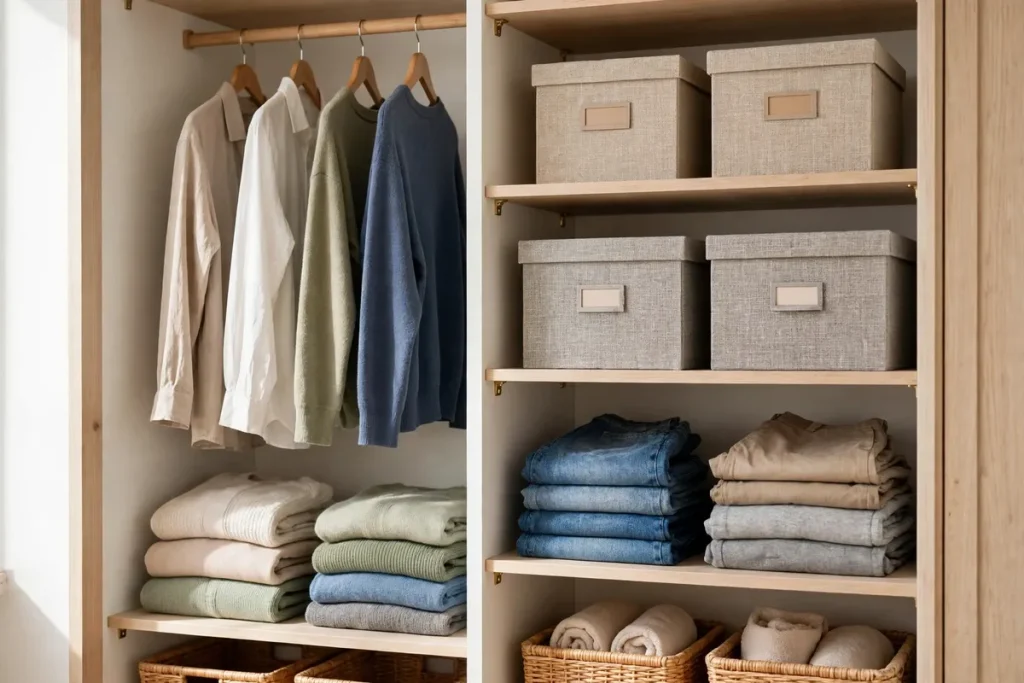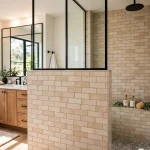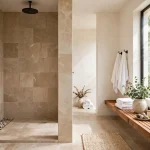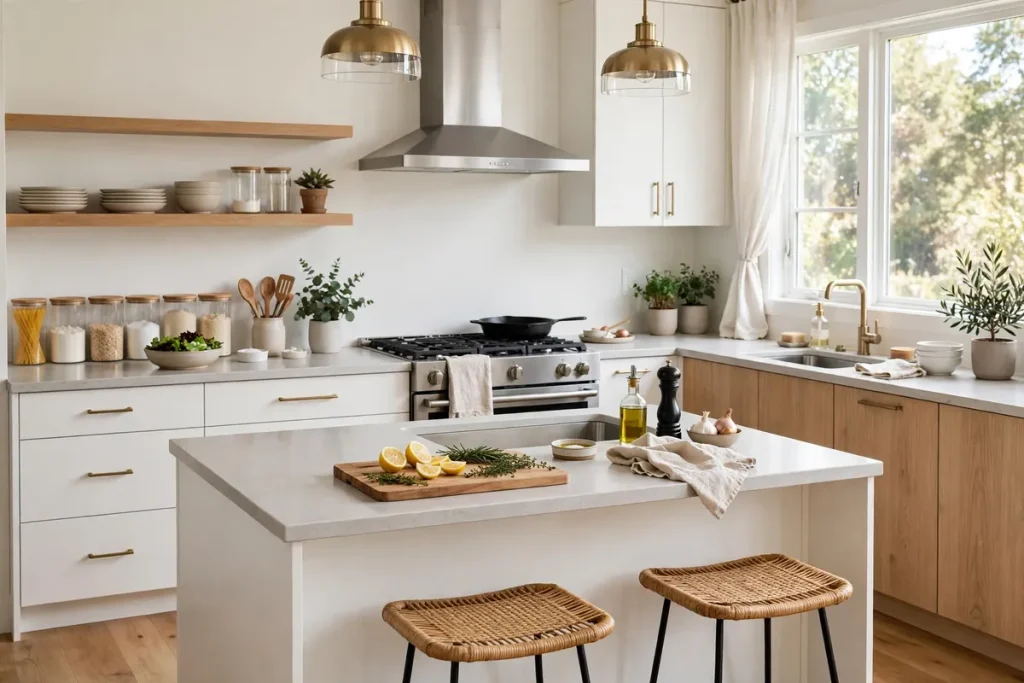

Wood colors are not just brown. A walnut floor is purple-brown, white oak is honey and grey, cherry is red-orange that deepens with age, and pine starts yellow and turns amber. Those differences decide whether your room feels warm or cool, light or dark, calm or busy, and they explain why two brown woods can clash while a brown and a grey wood can look perfect together. This guide lists the natural colors of every common wood species, explains warm and cool undertones, shows how stains change color, and gives practical rules for mixing wood tones and pairing wood with wall paint.
The Natural Colors of Common Woods
Every wood species has a signature color, and learning it is the fastest way to choose wood well. The table below covers the woods you will meet most often in floors, furniture and kitchens. Remember that the color of one board varies with the tree, the cut and the finish, so treat these as the center of a range, not as an exact shade.
| Wood | Natural color | Undertone | Typical use |
|---|---|---|---|
| White oak | Pale tan to honey | Warm, slightly grey | Floors, kitchens, furniture |
| Red oak | Light brown with pink | Warm, pink | Floors, stairs |
| Walnut | Chocolate brown | Cool, purple-grey | Floors, luxury furniture |
| Cherry | Reddish brown | Warm, red | Cabinets, furniture |
| Maple | Pale cream to light tan | Cool, slightly yellow | Floors, cabinets, butcher block |
| Pine | Pale yellow | Warm, yellow | Floors, rustic furniture |
| Ash | Pale straw to light brown | Cool, neutral | Floors, sports equipment |
| Hickory | Tan with dark streaks | Warm, varied | Floors, rustic kitchens |
| Mahogany | Deep reddish brown | Warm, red | Furniture, panelling |
| Teak | Golden brown | Warm, golden | Outdoor furniture, boats |
Warm vs Cool Wood Undertones
The undertone is the hint of another color inside a wood, and it matters more than the main color. A wood with a red undertone, like cherry or mahogany, feels warm and rich, and it suits warm paint, brass fittings and cream fabrics. A wood with a grey or purple undertone, like walnut or weathered oak, feels cool and calm, and it suits grey paint, black fittings and white fabrics. A wood with a yellow undertone, like pine or maple, feels sunny and casual, and it suits green, blue and cream.
To find the undertone of a wood in your home, hold a piece of white paper next to it in daylight. The wood’s undertone shows up against the white: pink and orange mean warm, grey, blue or purple mean cool, yellow means warm and sunny. Do the same test for your paint and your fabric, because a warm wood with a cool grey wall can look muddy, while the same wood with a warm cream wall looks as though it was made for the room. When you cannot tell the undertone, choose a neutral paint, such as a warm white or a pale greige, which works with almost every wood.
How Wood Colors Change Over Time
Wood is alive with light, and its color changes after it is installed. Cherry darkens the fastest: it can go from a light salmon pink to a deep reddish brown in a year of sunlight. Pine yellows and ambers steadily, which is why old pine floors look honey coloured. Walnut does the opposite: it lightens gradually, especially in strong sun, and the rich chocolate brown softens towards a lighter brown. Oak changes the least, which is one reason it is so popular for floors.
This matters when you match new wood to old wood. A new cherry board will never match an old cherry floor on day one, but it will catch up in a year. A new walnut floor will never match an old walnut board exactly, because the old one has lightened. If you are repairing a floor, keep a spare box of the original boards, and if you are buying new wood for a room with old wood, expect the match to improve with time, not to be perfect at once.
Wood Stain Colors: What Stains Do
Stains change color in ways that are not always obvious from the tin. A stain adds color on top of the wood’s natural color, so the result is always a blend of the two. The same stain looks different on different woods: a grey stain on pale maple looks cool and silver, while the same grey on red oak looks muddy, because the pink undertone is still there underneath. Dark stains even out the differences between woods, so they are the best choice when you want a uniform color on mixed woods, while light stains keep the differences visible.
| Stain family | Effect | Best on | Watch out for |
|---|---|---|---|
| Natural / clear | Keeps the wood’s color | Oak, walnut, teak | Undertone stays strong |
| Honey / golden oak | Adds warm gold | Pine, oak, maple | Can look orange on pine |
| Espresso / dark walnut | Deep, even brown | Oak, ash, mixed woods | Hides grain, shows dust |
| Grey / weathered | Cool, silvery tone | White oak, maple, ash | Looks muddy on red woods |
| Whitewash | Lightens, adds white | Pine, oak, beach styles | Needs a sealed topcoat |
Always test a stain on a spare piece of the same wood, with the same finish you plan to use, and look at it in the room, in daylight and in the evening. A stain card in the store tells you almost nothing about how it will look on your floor, because the store light and the wood are both different. Test with the topcoat as well, because oil finishes warm a color up and water-based finishes keep it cooler.
How to Mix Wood Colors in One Room
Mixing wood colors is the question people worry about most, and the rules are simpler than they look. First, keep the undertones the same: warm woods mix well with warm woods, and cool woods mix well with cool woods, even when the shades are different. Second, use one dominant wood and one or two supporting woods, and keep the supporting woods at a clearly different lightness from the dominant one, so the difference looks deliberate rather than accidental. Third, repeat each wood at least twice in the room, so it looks like a choice rather than a leftover.
Worked example: a living room with a warm white oak floor, a walnut coffee table and a pine bookshelf works, because the oak and pine are both warm and light, and the walnut is the one dark note that repeats in the dark picture frames. A room with a red oak floor, a cherry table and a grey-stained shelf fails, because the red undertones fight the grey, and nothing repeats. When in doubt, add a neutral bridge: a rug, a black metal frame or a cream cushion, which separates the woods visually and lets them sit side by side.
Matching Wood Colors With Wall Paint
Wall paint is the fastest way to change how a wood color looks, and it is much cheaper than changing the wood. Warm woods look best with warm paints: cream, warm white, sage green and soft terracotta make a warm wood floor look richer. Cool woods look best with cool paints: pale grey, cool white, soft blue and greige make a cool wood floor look calmer and more modern. The safe rule is contrast: a light floor pairs with a darker wall, and a dark floor pairs with a light wall, because the same lightness of wood and wall washes a room out and makes it feel flat.
If you want a rule of thumb, start with the floor’s undertone and pick a paint with the same undertone, then choose a lightness that is at least two steps lighter or darker than the floor. A dark walnut floor with pale grey-blue walls is a classic pairing because the cool grey echoes the walnut’s cool undertone, while the lightness difference gives the room shape. A honey oak floor with a deep green wall works for the same reason: the warm green echoes the oak’s warmth, and the dark wall makes the light floor shine.
Wood Color Mistakes to Avoid
The most common mistake is choosing a wood color from a tiny sample in a shop and expecting it to look the same on a whole floor. A floor is more than a hundred times the area of a sample, and a small color becomes a big color across a room. The second mistake is mixing red and orange undertones with grey ones, which makes both look dirty. The third is ignoring the finish: a glossy finish darkens and warms a wood, while a matte finish keeps it lighter and cooler, so the same stained wood can look like two different colors. The fourth is forgetting sunlight: a room with strong sun will darken cherry and lighten walnut, so the color you love on the day it is fitted will not be the color you have in two years.
Frequently Asked Questions About Wood Colors
What are the most popular wood colors right now? Pale, natural oak in honey and warm grey tones is the most popular, followed by dark walnut and whitewashed pine. Warm mid-tone woods are coming back after a long run of cool grey.
Can you mix different wood colors in one room? Yes, if the undertones match and one wood clearly leads. Repeat each wood at least twice, keep the lightnesses different, and use a neutral rug or metal frame to bridge them.
What wall color goes with dark wood floors? Light, cool paints work best: pale grey, cool white and soft blue all suit dark wood, because the contrast shows off the floor and the cool tone suits the wood.
Does wood color change over time? Yes. Cherry darkens, pine ambers, and walnut lightens in sunlight. Oil finishes warm a color up, water-based finishes keep it cooler, and the change is fastest in the first year.
Wood colors are about more than brown. Learn the species, check the undertone against white paper, and test stains and paint in the room before you commit. Once you have picked a wood color, see what color walls go with a dark wood floor, whether you need the best area rugs for hardwood floors, and the closet organizer 2026 guide for matching wood tones.