
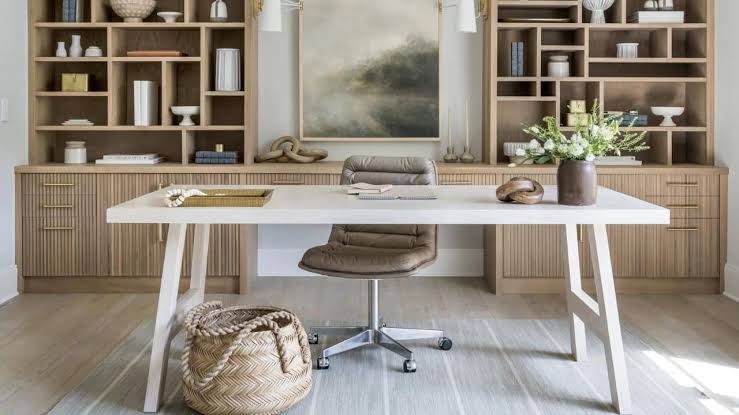

Disorganised spaces don’t just look bad. They slow you down and cost you money. Misplaced items, wasted time, damaged stock — they all add up. The right storage shelves solve most of that without renovation, without major investment, and without rearranging your entire life. A 2020 productivity study by Princeton University found that physical clutter in your visual field reduces your brain’s ability to focus by up to 24%. That applies to your home office, garage, warehouse, and kitchen. Shelving is the single most cost-effective fix for disorganisation in most spaces.
What Type of Shelving Works Best in a Home Setting?
It depends entirely on what you’re storing. For pantries and kitchens, adjustable wire or laminate shelving with 300mm to 400mm depth handles most food and appliance storage. For home offices, closed-back shelving prevents visual clutter and keeps paper and files contained. For laundry rooms, wall-mounted floating shelves above appliances give you detergent, cleaning product, and linen storage without touching floor space. The key principle is matching shelf depth to item depth. Overly deep shelves create dead space behind stored items and encourage hoarding.
How Should Workplace Storage Shelves Be Set Up?
Workplaces need shelving that meets load requirements and safety standards. In Australia, freestanding shelving in commercial settings must comply with AS 4084 for pallet racking or relevant manufacturer load ratings for lighter duty systems. Anti-tip fittings are mandatory if there’s any risk of units being struck or climbed. Shelving above head height needs secure fixings to the wall or floor. For office environments, steel tambour units or lateral filing cabinets on open shelving frames handle documents efficiently. In warehouses, heavy-duty boltless shelving in 900mm depth handles most case-picked stock.
Can Shelving Systems Be Mixed Across Different Rooms?
Yes, and this is where good systems beat cheap ones. Modular shelving platforms use consistent upright heights and compatible brackets across multiple configurations. That means a unit you bought for the garage can be extended or reconfigured for a shed, storage room, or retail space. Brands that use standard upright spacing of 25mm pitch give you the most flexibility. You add shelves, remove them, raise them, or lower them without buying new uprights. Over a 10-year period, a quality modular system is significantly cheaper than buying new fixed shelving every time your needs change.
What’s the Right Height for Storing Heavy Items?
Between knee height and shoulder height. That’s the ergonomic sweet spot. Heavy items stored above shoulder height increase injury risk significantly. Safe Work Australia’s manual handling guidelines recommend that loads over 16kg should not be lifted above shoulder height in regular work settings. In home storage, the same logic applies. Heaviest items on the bottom two shelves, lighter items at eye level, rarely-used light items on top. This also lowers the centre of gravity of the loaded shelving unit, which reduces tip-over risk considerably.
How Do You Stop Shelves from Becoming Cluttered Again?
Label every shelf and assign it a single category. One shelf. One purpose. No mixing. Labelling takes 20 minutes. It saves hundreds of hours over a lifetime of use. Set a rule: nothing goes on a shelf unless it belongs to that category. Overstock gets removed, not crammed in. Every three to six months, do a quick audit. Remove anything that hasn’t been touched. Donate, discard, or relocate it. The shelf itself doesn’t cause clutter. Undefined storage does. Give every shelf a job and it stays organised permanently.