
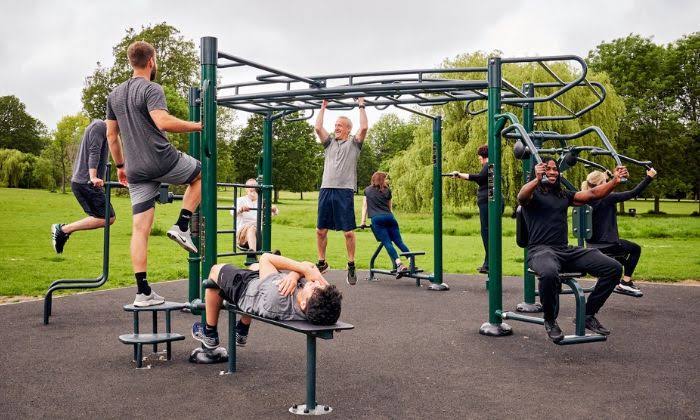

Gyms are expensive, climate-controlled, and often intimidating. Parks are free, open, and available to everyone. The gap between the two has always been the equipment. That gap is closing. Cardio park equipment by UrbanFit brings professional-grade cardiovascular training infrastructure to public outdoor spaces. Air walkers, elliptical trainers, cycling machines, and stepper units designed for outdoor durability deliver measurable cardiovascular health benefits to communities that would not otherwise access them. The World Health Organization reports that 1.4 billion adults globally are insufficiently active. Outdoor cardio equipment in parks is one of the most cost-effective, scalable responses to that crisis. The research is clear. Access drives participation.
What Cardiovascular Benefits Does Outdoor Cardio Equipment Actually Deliver?
The cardiovascular benefits are the same as indoor equipment when used at appropriate intensity. A study published in Preventive Medicine Reports tracked 500 park users across 12 parks in Australia over 6 months. Participants who used outdoor cardio equipment for 30 minutes at moderate intensity three times per week showed reductions in resting heart rate, systolic blood pressure, and waist circumference comparable to those achieved in supervised gym programmes. Outdoor setting does not diminish the physiological outcome. It just changes the social context.
Moderate intensity cardio, meaning 50 to 70% of maximum heart rate, is the standard recommendation for cardiovascular health maintenance in adults. Air walkers and ellipticals placed in parks make that target achievable for free, at any time, with no membership and no queue.
How Does UrbanFit Equipment Handle Outdoor Conditions?
This is the difference between good and bad outdoor fitness infrastructure. Consumer-grade fitness equipment fails in outdoor conditions within 2 to 3 years. UV radiation degrades plastics and rubber. Moisture corrodes joints. Temperature cycling loosens fasteners. UrbanFit’s outdoor cardio units are built to a different specification entirely. Hot-dip galvanised steel frames, stainless steel pivot points, UV-stabilised polymer grips and foot platforms, and sealed bearing systems are standard construction features.
The design life for commercial outdoor fitness equipment meeting Australian Standards AS 4486 and ISO 20957-1 is a minimum of 10 years with routine maintenance. That makes the per-use cost of a quality outdoor gym dramatically lower than any indoor facility over its lifetime. A single outdoor cardio unit installed in a high-traffic park can log 50,000 individual uses over its service life.
Does Outdoor Cardio Equipment Actually Get Used?
Usage data consistently surprises people who have not checked it. A 2022 audit of 48 outdoor gym sites across Victoria, New South Wales, and Queensland found that outdoor fitness equipment recorded an average of 42 individual uses per day in urban parks and 28 uses per day in suburban settings. Peak usage was between 6 and 8 AM and again between 5 and 7 PM. Weekend usage exceeded weekday usage by 18%. These are not empty installations gathering rust. They are heavily used community assets.
Usage rates increase significantly when equipment is installed in clusters rather than as single units. A mix of cardio and strength equipment in a defined outdoor gym zone attracts users who stay longer and return more frequently than single-unit installations.
Who Uses Outdoor Cardio Equipment Most?
The demographic spread is wider than most councils expect. Research from Deakin University’s Institute for Physical Activity and Nutrition found that outdoor gym equipment attracted users aged 18 to 75. The highest user group by frequency was adults aged 35 to 54, a demographic with low gym membership rates and high chronic disease risk. For this group, free, accessible, no-commitment outdoor cardio equipment removes every barrier except motivation. Cost, transport, hours of operation, and social intimidation are all eliminated.
Older adults aged 60 and above showed particularly high engagement with low-impact cardio units like air walkers and seated ellipticals. These units provide effective cardiovascular stimulus with minimal joint impact, addressing the specific fitness needs of ageing populations.
What Is the Broader Community Health Impact?
The economics of preventive health infrastructure are compelling. Cardiovascular disease costs the Australian health system approximately $7.7 billion annually. Physical inactivity is a primary risk factor. Every $1 spent on quality outdoor fitness infrastructure in public parks has been estimated to return between $4 and $7 in reduced health system costs over a 10-year period, based on modelling from the Australian Institute of Health and Welfare. These are not soft social benefits. They are measurable fiscal returns on public investment.
How Should Councils Plan an Outdoor Cardio Installation?
Location is the single most important factor in maximising usage. Proximity to pedestrian pathways, visibility from main park thoroughfares, and co-location with other amenities like toilets, shade, and water all drive higher uptake. Signage with clear usage instructions and QR codes linking to demonstration videos increases correct usage rates and reduces injury risk. The most successful outdoor gym installations combine cardio and strength elements in a dedicated zone of between 100 and 200 square metres, with impact-absorbing rubber surfacing beneath all units.