
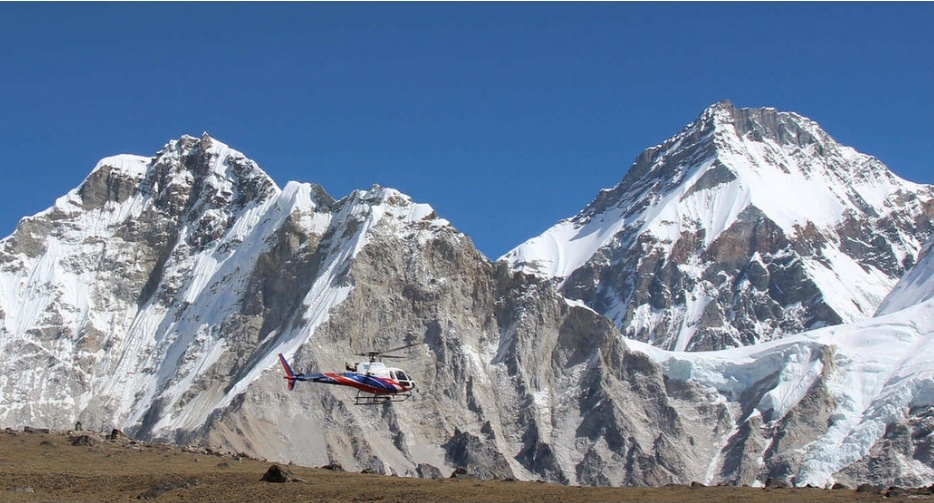

The Everest Base Camp helicopter-return trek has emerged as one of the most common methods to take an adventure through the most renowned trekking trail in Nepal, without the lengthy walk down to Lukla. It is an option that, to many travellers, is an adventure, comfort, and a spectacular Himalayan scenery in a single memorable journey. However, since it is much more expensive than the typical Everest Base Camp hike, many would pose the same question: Is it worth the extra price?
It will depend on your mode of travel, budget, fitness, and the type of trekking experience you require. Some of the trekkers enjoy the traditional round-trip trekking, and others enjoy going to the Everest Base Camp and then continuing the journey by helicopter, enjoying a spectacular aerial view of the Khumbu region. In this guide, we shall discuss the question of whether or not the Everest Base Camp trek using helicopters to get back to the base is worth the visit.
What Is the Everest Base Camp Trek with Helicopter Return?
The Everest Base Camp helicopter return trek is a guided trek along the traditional trekking path through the Everest Valley, starting with a flight to Lukla at 2,860 m (9,383 ft). It starts there with trekkers going through renowned Sherpa villages such as Phakding, Namche Bazaar, Tengboche, Dingboche, Lobuche, and Gorakshep to the Everest Base Camp of 5,364 m (17,598 ft).
In most itineraries, trekkers also climb Kala Patthar at an altitude of 5,545 m (18,192 ft), where they have the best panoramic view of Mount Everest.
As opposed to walking back down over a few days, the journey back occurs via helicopter, typically from Gorakshep at 5,164 m (16,942 ft) or even Pheriche at 4,371 m (14,340 ft), depending on weather conditions, passengers, and aviation laws. In this version, the adventure of reaching Everest Base Camp is maintained, and the overall time of trekking is minimized.
How Long Does the Trip Take?
An average Everest Base Camp trek is approximately 12-14 days, which may be extended to some extent due to acclimatization periods and weather delays.
The Everest Base Camp trek by helicopter round trip is normally 9 to 11 days long since the lengthy descent will be eliminated. The helicopter service saves much time since it is expected to take three to four days of trekking to get back to Lukla once you have left the base camp of Everest.
This will help it appeal to those tourists who have a limited time to take their vacation, yet desire to have the entire experience of trekking to Everest.
The Biggest Advantages of Helicopter Return
Time efficiency is one of the best reasons why individuals opt to do the Everest Base Camp trek using helicopters as a means of returning. A lot of tourists do not have two weeks to spend on trekking activities, particularly foreigners with limited time. This option can be very practical as it can save one several days without missing the key highlights.
Another key cause is physical fatigue. It is challenging to reach Everest Base Camp. Trekking to Gorakshep, most trekkers are tired of several days of hiking at high altitudes, low temperatures, and rough living conditions. The fall can be less difficult on the lungs, but more difficult on the knees, ankles, and muscles. This physically tiring part is eliminated by a helicopter return.
Another massive benefit is the aerial nature. A different perspective is when you view the Himalayas from the air. Peaks covered with snow, deep valleys, glaciers, and mountain villages that are remote and distant look dramatically different at high altitudes. The helicopter ride is one of the most memorable experiences of the trip for many travelers.
Comfort also matters. The conventional route is the repetition of overnight stays in tea houses and lengthy walks on a daily basis. Comfort is a consideration with you, and a quick scenic flight at the end of the trip, rather than further hiking, can seem like a big bonus.
The Downsides You Should Consider
The greatest drawback is price. A typical trek to the base camp of Everest would be much less expensive than the helicopter-return trip. The average cost of the Everest Base Camp trek with helicopter return varies between USD 2200 and USD 4500 per person, depending on the operator, group size, services, and season, with higher-end versions available at higher prices.
It is a common practice to share helicopter seats among two or more passengers, and this saves on costs. It is significantly higher in the case of private helicopter returns.
Weather uncertainty is another issue. Helicopter tours in the Everest area are greatly reliant on the weather of the mountain. Delays or cancellations can happen due to poor visibility, wind, or a sudden change in weather conditions. This implies that flexibility is required.
Other trekkers even consider that by not doing the descent, they are depriving themselves of the true trekking experience. The latter will give more time to walk through the villages, meet locals, and experience the gradual change in the alpine landscape to the greenery. When you enjoy the ride, but not the destination, the helicopter shortcut might not be as gratifying.
Is It Safer Than Trekking Back?
Falling on foot is not as dangerous in terms of altitude sickness since a downward shift in elevation is beneficial to recovery. But the physical dangers of down climbing are slips, falls, strain of the joints, and fatigue.
Helicopter return is a procedure that eliminates the physical exertion of the landing but creates dependency on aviation. Nepal mountain flying is done by advanced pilots, yet weather conditions are an inevitable aspect.
Helicopter return fails to eliminate altitude risk in the uphill climb. Mountaineers continue to reach Everest Base Camp, 5,364 m (17,598 ft), at which altitude sickness continues to be a critical issue. It is necessary to acclimatize properly.
Who Should Choose This Trek?
Everest Base Camp trek with helicopter return is also one of the tours that are most appropriate for travelers who may desire the experience of Everest but have limited time. It is also handy with fairly fit individuals, but they fear the effort of the lengthy descent.
This is a favorite choice of photographers due to the spectacular mountain scenery. The upgraded experience can also be enjoyed by travelers who are celebrating special occasions like anniversaries, honeymoons, or milestone birthdays.
This itinerary is usually attractive to older trekkers who can cope with the ascent but wish to minimize the physical exertion. Nevertheless, those trekkers who desire the traditional round trip route, have a tighter budget or a slower, more cultural trip can use the classical round trip path.
What Does the Helicopter Experience Feel Like?
The helicopter tour in the Everest area is not just a means of transportation. It is a picturesque mountain flight with one of the most scenic landscapes in the world.
Trekking along the Himalayas, one can see glaciers, rocky ridges, snowy summits, and well-known Himalayan giants one after another as the helicopter lifts above Gorakshep. Depending on the route and weather, sights will consist of Everest, Lhotse, Nuptse, Ama Dablam and other nearby mountains.
The journey is rapid, exhilarating, and breathtaking. It is like a literal grand finale to the days of laborious trekking for many travelers. Due to altitude and aircraft performance constraints, flights can include short flight operation stops, shuffling of passengers or weight.
Cost vs Value: Is the Upgrade Worth Paying For?
Value is all about what is most important to you. When your overall objective is to achieve the cheapest Everest trek, it might not seem worthwhile to spend extra money on a helicopter. The traditional path already provides the complete trekking experience.
When comfort maximization, time savings, physical under-strain, and memorable aerial Himalayan experiences are more important than the premium, the additional expense might become completely worth it.
Imagine it as not only paying to get there, but paying to save time, to be convenient and comfortable, and to have a premium experience. Those advantages are a dollar well spent in the eyes of some traveler. To some, the archetypal descent is still a part of the adventure they desire in particular.
Best Time for This Trek
Spring (March to May) and autumn (September to November) are the best seasons to trek to the Everest Base Camp using helicopters as the means of returning.
These are the months with a clearer sky, more stable conditions, and more visibility of the mountains, which enhance the conditions of trekking and the reliability of helicopter flights.
A winter trek can be done, but a lot colder, particularly above Dingboche. Monsoon season is characterized by rain and cloud cover, and an increased probability of flight disruptions.
When the reliability of helicopters is a concern with the plan, then seasonal selection is crucial.
Conclusion
Then, is the Everest Base Camp hike with a helicopter back worth it? Yes, to several of you travelers.
It provides the adventure and accomplishment of making it to the Everest Base Camp and eliminates the most tedious and physically challenging process of the expedition. It not only saves precious time but also introduces a spectacular scenic helicopter flight and a more comfortable ride back.
Nevertheless, it is not the most suitable option for all people. Practical trekkers, perfectionists, and people who desire the entire traditional trekking experience might find the traditional round-trip trek more fulfilling.
The Everest Base Camp trek by helicopter return may make a great investment and one of the most rewarding ways to explore the Everest region, should you appreciate the value of efficiency, comfort and unforgettable aerial views of the Himalayas.