
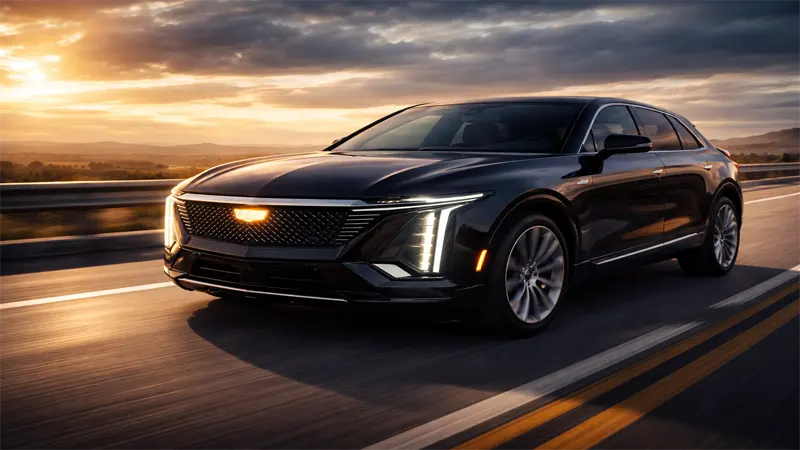

If you’ve ever wondered “do the driving modes in Cadillac Lyriq offer different ranges or battery usages?”—you’re actually asking one of the most practical questions any EV driver can explore. Because with an electric SUV like the Cadillac Lyriq, driving mode isn’t just about how the car feels—it can quietly influence how far you go on a single charge.
Let’s break it down in a real, human way without overcomplicating things.
Understanding Driving Modes in the Cadillac Lyriq
The Cadillac Lyriq isn’t just designed to move from point A to B—it adapts its personality depending on how you want to drive. Different modes adjust throttle response, steering feel, climate behavior, and energy delivery. These changes directly influence battery consumption and, in some cases, overall driving range.
Most Lyriq models include modes such as:
- Tour (default comfort mode)
- Sport (performance-focused)
- Snow/Ice (traction-focused)
- My Mode / Custom settings (user-defined preferences)
Each mode doesn’t magically change the battery capacity, but it changes how aggressively that energy is used.
So, Do Driving Modes Actually Affect Range?
Yes—but indirectly.
The battery size remains fixed in the Lyriq (depending on configuration, usually offering around 300+ miles of EPA-estimated range), but how quickly you use that energy depends heavily on driving behavior shaped by the selected mode.
Think of it like this:
- Eco-friendly behavior = slower energy use = longer range
- Performance-focused behavior = faster energy use = reduced range
Driving modes simply guide you toward one of these behaviors.
How Each Driving Mode Impacts Battery Usage
To really understand the differences, it helps to compare how each mode adjusts the vehicle’s systems.
| Driving Mode | Throttle Response | Climate System Behavior | Regenerative Braking | Energy Consumption | Real-World Range Effect |
|---|---|---|---|---|---|
| Tour (Comfort) | Balanced, smooth | Normal HVAC usage | Moderate regen | Moderate | Baseline range |
| Sport | Sharp, aggressive acceleration | More power to systems | Reduced or tuned regen feel | Higher consumption | Slightly reduced range |
| Snow/Ice | Soft, controlled power delivery | Stability-focused settings | Increased stability regen control | Moderate | Slight reduction depending on conditions |
| Eco-style tuning (via settings) | Dull/efficient throttle mapping | Optimized HVAC efficiency | Strong regen emphasis | Lowest consumption | Best possible range |
What stands out here is not just speed or responsiveness—it’s how the car manages energy distribution. In real-world conditions, those small adjustments stack up over long drives.
A Personal Driving Observation
I noticed during a long highway trip that switching from Sport mode to Tour mode made the Lyriq feel almost like a different vehicle—not just in acceleration, but in how slowly the battery percentage dropped over time. The difference wasn’t dramatic in a single mile, but after 60–70 kilometers, the efficiency gap became surprisingly noticeable.
That’s the subtle truth about EVs: small behavioral changes add up more than you expect.
Why Driving Modes Change Efficiency
Electric vehicles like the Lyriq don’t burn fuel—they manage electrical energy flow. Driving modes influence three key systems:
1. Throttle Mapping
Sport mode delivers instant torque with minimal pedal movement, which feels exciting but consumes more power.
Tour mode smooths out acceleration, reducing energy spikes.
2. Regenerative Braking Behavior
Regenerative braking recovers energy when slowing down. In more efficient modes, regen is tuned to capture more energy and reduce waste.
However, in Sport mode, the focus shifts to performance feel rather than maximum recovery.
3. Climate and Comfort Systems
Heating and cooling systems in EVs are significant energy consumers. Some modes subtly adjust HVAC aggressiveness to preserve battery life.
On hot or cold days, this difference becomes more noticeable than many drivers expect.
Daily City vs Highway Driving
Imagine two drivers using the same Cadillac Lyriq:
Driver A: City Commuter (Eco/Tour Mode)
They drive through traffic lights, stop-and-go roads, and short trips. Using Tour mode, their acceleration stays smooth, and regenerative braking recovers energy frequently.
Result: They consistently get closer to the upper range estimate.
Driver B: Highway Enthusiast (Sport Mode)
This driver enjoys faster acceleration on open highways. Sport mode makes the car more responsive, but energy drains faster at higher speeds and with aggressive inputs.
Result: Range drops sooner, even though the battery capacity is identical.
Same vehicle. Same battery. Completely different outcomes.
Hidden Factors That Matter More Than Mode Alone
While driving modes do matter, they are only part of the equation. In real-world EV ownership, these factors often have even bigger impact:
- Speed consistency (high speeds reduce range significantly)
- Weather conditions (extreme heat or cold affects battery efficiency)
- Tire pressure and type
- Use of HVAC systems
- Terrain (hills vs flat roads)
So, even if you stay in Tour mode, aggressive driving or poor conditions can still reduce efficiency.
Where Cadillac Lyriq Really Shines
The beauty of the Cadillac Lyriq is not just its luxury feel—it’s how intelligently it balances comfort and efficiency.
Instead of forcing you to manually manage battery usage, it offers driving modes that gently guide your behavior without making the experience feel restricted. That’s a key difference between modern EVs and older fuel-based vehicles.
Practical Tips to Maximize Range
If your goal is to get the most mileage out of every charge, here’s what actually works:
- Stick to Tour or Eco-style settings for daily driving
- Avoid unnecessary hard acceleration
- Use regenerative braking as your default slowing method
- Pre-condition the cabin while plugged in
- Maintain steady highway speeds instead of frequent speed changes
These habits matter far more than switching modes once in a while.
Also Read: Brumeblog com Explained: What You Need to Know Today
Conclusion
So, do driving modes in the Cadillac Lyriq offer different ranges or battery usages? The answer is yes—but indirectly. The battery itself doesn’t change, but how it is used absolutely does.
Eco-focused and Tour-style driving helps stretch range, while Sport mode prioritizes performance at the cost of efficiency. Snow/Ice mode sits somewhere in between, optimizing stability rather than speed or range.
Ultimately, the Lyriq gives drivers control—not just over how the car feels, but how intelligently it uses energy. And that flexibility is what makes modern EV driving genuinely adaptable to real life.
FAQs
1. Does Sport mode drain the Cadillac Lyriq battery faster?
Yes. Sport mode increases throttle sensitivity and acceleration, which leads to higher energy consumption.
2. Which driving mode gives the best range?
Tour or Eco-style settings generally deliver the most efficient energy usage and longest range.
3. Does Snow mode reduce range significantly?
Not usually. It may slightly affect efficiency due to traction and stability adjustments, but not dramatically.
4. Can I switch driving modes while driving?
Yes, most modes in the Lyriq can be changed on the go without damaging the system or battery.
5. Is range difference noticeable in daily use?
In short trips, not much. Over long drives or highway travel, differences become more noticeable.
6. Does driving mode affect charging speed?
No. Charging speed depends on the battery system and charger, not driving mode.