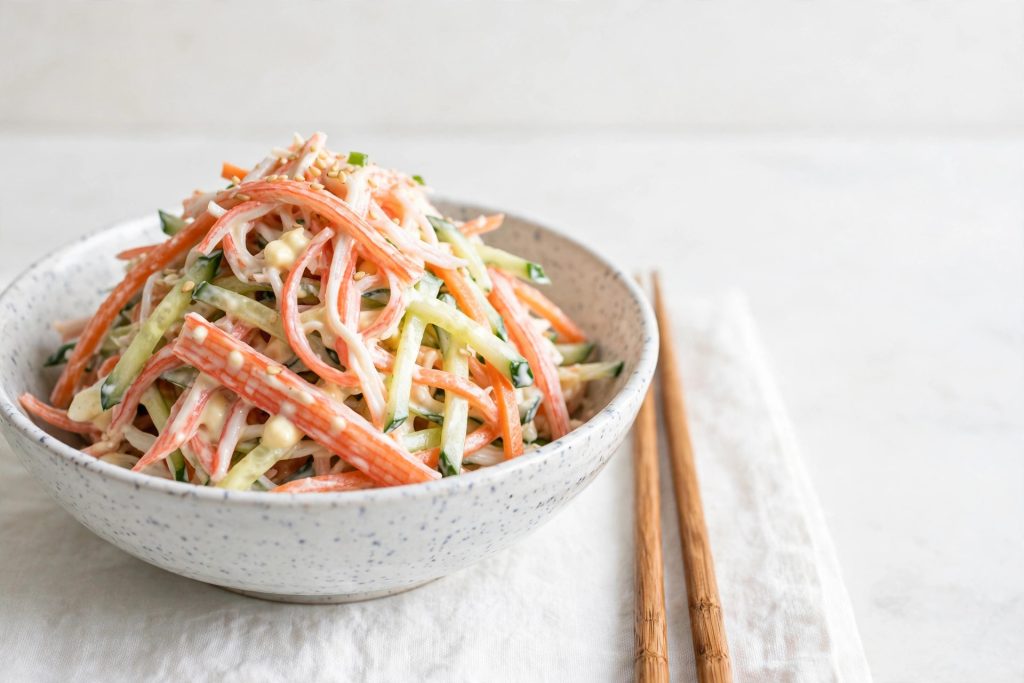

Kani salad is a light, creamy Japanese salad made with shredded imitation crab, crisp cucumber, and a sweet-tangy Kewpie mayonnaise dressing. You have probably seen it at sushi restaurants, where it is served as a small starter or tucked into sushi rolls. The good news is that this kani salad recipe takes only about 15 minutes, uses mostly pantry ingredients, and tastes just as good at home as it does at your favorite Japanese restaurant.
In this guide, you will get the classic kani salad recipe with exact ingredients and steps, plus tips for the best texture, spicy and mango variations, and how to store leftovers safely.
What Is Kani Salad?
Kani is the Japanese word for crab, and kani salad is a Japanese-style crab salad. Most versions outside Japan use imitation crab, also called surimi or crab sticks, which is made from white fish that is processed, flavored, and shaped to taste like crab. It is affordable, easy to shred, and already cooked, which makes the salad fast to prepare.
Unlike a heavy American crab salad, kani salad is light and refreshing. The crab is shredded into thin strands, mixed with julienned cucumber and sometimes carrot, and coated in a creamy dressing made with Japanese mayonnaise, rice vinegar, and a little sugar. It is often finished with sesame seeds, tobiko (flying fish roe), or a drizzle of sriracha for color and flavor.
Kani salad is usually served chilled as a side dish or appetizer, but it is also filling enough to serve as a light lunch over rice or greens.
Kani Salad Recipe Ingredients
This recipe serves 4 as a side dish, or 2 as a light main. Scale it up easily for a party.
For the salad
- 8 ounces (225 g) imitation crab sticks, thawed if frozen
- 1 large English cucumber, or 2 small Persian cucumbers
- 1 medium carrot, peeled (optional, for color and crunch)
- 1 green onion, thinly sliced
- 1 tablespoon toasted sesame seeds
- 1 tablespoon tobiko or masago, optional, for garnish
For the dressing
- 1/4 cup Kewpie mayonnaise (Japanese mayonnaise)
- 1 tablespoon rice vinegar
- 1 teaspoon soy sauce
- 1 teaspoon sugar
- 1 teaspoon sesame oil
- 1 teaspoon sriracha, or more to taste (optional)
- 1/2 teaspoon grated fresh ginger, optional
Kewpie mayonnaise is the key to an authentic flavor. It is richer and slightly sweeter than regular mayonnaise, because it is made with egg yolks only and rice vinegar. You can find it in most supermarkets or Asian grocery stores. If you cannot find it, use regular mayonnaise and add an extra half teaspoon of rice vinegar and a pinch of sugar.
How to Make Kani Salad: Step by Step
Step 1: Shred the crab
Unwrap the imitation crab sticks and pull them apart into thin strands with your fingers, or shred them with two forks. You want long, thin shreds, not chunks, because that gives the salad its classic texture. Place the shredded crab in a large mixing bowl.
Step 2: Prepare the vegetables
Cut the cucumber in half lengthwise and scoop out the seeds with a spoon, so the salad does not turn watery. Then cut the cucumber into thin matchsticks, about 2 inches long. Peel the carrot and cut it into thin matchsticks the same way. Add the cucumber, carrot, and green onion to the bowl with the crab.
Step 3: Make the dressing
In a small bowl, whisk together the Kewpie mayonnaise, rice vinegar, soy sauce, sugar, sesame oil, and sriracha until smooth. Taste it and adjust: add a little more vinegar for brightness, more sugar for sweetness, or more sriracha for heat.
Step 4: Toss and chill
Pour the dressing over the crab and vegetables, and toss gently until everything is evenly coated. Sprinkle in the sesame seeds and toss again. Cover and chill the salad in the refrigerator for at least 15 minutes, so the flavors meld and the salad is cold and refreshing when served.
Step 5: Serve
Serve the kani salad chilled, in small bowls or on a bed of lettuce. Garnish with extra sesame seeds, tobiko, and a drizzle of sriracha if you like. It pairs well with sushi, rice bowls, grilled fish, or simply on its own.
Total time is about 15 minutes, plus 15 minutes of chilling. There is no cooking involved, which makes this one of the easiest Japanese recipes to make at home.
Tips for the Best Kani Salad
Use English or Persian cucumbers, which have thin skins and fewer seeds than regular cucumbers. Always remove the seeds, and if your cucumber seems very wet, sprinkle the matchsticks with a pinch of salt, let them sit for 10 minutes, and squeeze out the extra water with a clean towel.
Do not overdress the salad. Start with about three-quarters of the dressing, toss, and add more only if needed. The salad should be creamy but not soupy, and the crab strands should still be visible.
Make it just before serving when you can. The cucumber releases water over time, so the salad is at its best within a few hours of making it. If you need to make it ahead, keep the dressing separate and toss it together just before serving.
For a fresher finish, add a little grated ginger or a squeeze of lime to the dressing, and finish with sliced green onion and sesame seeds. If you enjoy fresh herbs, a little chopped tarragon can add a bright note, and our tarragon substitute guide lists good swaps if you do not have tarragon on hand.
Kani Salad Variations
| Variation | What changes | Best for |
|---|---|---|
| Classic kani salad | Crab, cucumber, Kewpie dressing | The restaurant-style starter |
| Spicy kani salad | Extra sriracha and a little chili oil | People who like heat |
| Kani mango salad | Add diced ripe mango and lime | A sweet, tropical twist |
| Kani avocado salad | Add diced avocado just before serving | A richer, creamier salad |
| Low-carb kani salad | Skip the sugar, serve over greens | A lighter lunch |
| Real crab kani salad | Use cooked real crab meat instead | A special-occasion version |
For the spicy version, add one to two extra teaspoons of sriracha and a teaspoon of chili crisp to the dressing. For the mango version, fold in half a cup of diced ripe mango at the end, so it keeps its shape. For a crunchier salad, top it with a spoonful of toasted panko breadcrumbs just before serving.
What to Serve With Kani Salad
Kani salad works as a side dish with almost any Japanese meal. Serve it with sushi or sashimi, miso soup, steamed rice, or a teriyaki chicken or salmon rice bowl. It is also good on its own as a light lunch, spooned over a bowl of rice or mixed greens.
For a party, serve it in small cups or lettuce cups as a finger-food starter. It is easy to scale up: double the ingredients for eight servings, and make the dressing in a larger bowl so you can whisk it smoothly.
How to Store Kani Salad
Store leftover kani salad in an airtight container in the refrigerator and eat it within 2 to 3 days. The cucumber will soften and release water over time, so it is best on the first day. Do not freeze kani salad, because the cucumber and mayonnaise dressing do not freeze well and the texture will turn watery when thawed.
If you have leftover crab salad of another kind, the rules are similar: keep it cold, eat it within a few days, and do not leave it at room temperature for more than two hours. Our guide on can you freeze chicken salad explains why creamy salads are best kept refrigerated rather than frozen, and the same logic applies here.
Is Kani Salad Healthy?
Kani salad is relatively light, especially compared with heavier creamy salads. Imitation crab is low in fat and calories, although it is processed and contains some sodium and added sugar. Cucumber and carrot add fiber, water, and crunch with very few calories.
The dressing is the richest part, because mayonnaise is high in fat. You can lighten it by using half mayonnaise and half plain Greek yogurt, or by using a light Kewpie mayonnaise. That keeps the creamy flavor while cutting some of the fat. As with any salad, the healthiest version is the one you make at home, where you control the sugar, salt, and dressing amount.
Frequently Asked Questions
What is kani salad made of?
Kani salad is made of shredded imitation crab, julienned cucumber, and sometimes carrot, tossed in a creamy dressing of Kewpie mayonnaise, rice vinegar, soy sauce, sugar, and sesame oil. It is often garnished with sesame seeds, green onion, and tobiko.
Is kani salad raw?
No. Imitation crab is fully cooked during processing, so kani salad is not raw. Real crab used in the salad is also cooked. The salad is served cold, which is why it can look like a raw dish, but nothing in it needs cooking.
Can I use real crab instead of imitation crab?
Yes. Use the same weight of cooked, picked crab meat, and shred or flake it gently. Real crab has a sweeter, more delicate flavor, so you may want to use a little less dressing so the crab flavor comes through.
How long does kani salad last in the fridge?
Kani salad lasts 2 to 3 days in an airtight container in the refrigerator. It tastes best on the first day, because the cucumber releases water over time. Do not freeze it, and discard it if it smells sour or the dressing separates.
What is the difference between kani salad and crab salad?
Kani salad is a Japanese-style salad with shredded imitation crab, cucumber, and a Kewpie mayonnaise dressing, while American crab salad is often made with real crab, celery, and regular mayonnaise, and is usually served as a sandwich filling or on crackers. Kani salad is lighter, sweeter, and served as a side dish or starter.
This kani salad recipe is a quick, fresh, and forgiving dish: shred the crab, cut the cucumber, whisk the dressing, and toss. Once you have made the classic version, try it spicy, with mango, or with avocado, and make it your own. Serve it cold, eat it within a few days, and enjoy a taste of your favorite sushi restaurant at home.